Data Model
OpsDeck uses SQLAlchemy as its ORM with PostgreSQL as the sole supported database. The data model is organized into domain-specific model files with shared patterns for cross-cutting concerns.
Overview
The full schema has 80+ tables across 27 model files. Rather than one monolithic diagram, the relationships are documented below by domain.
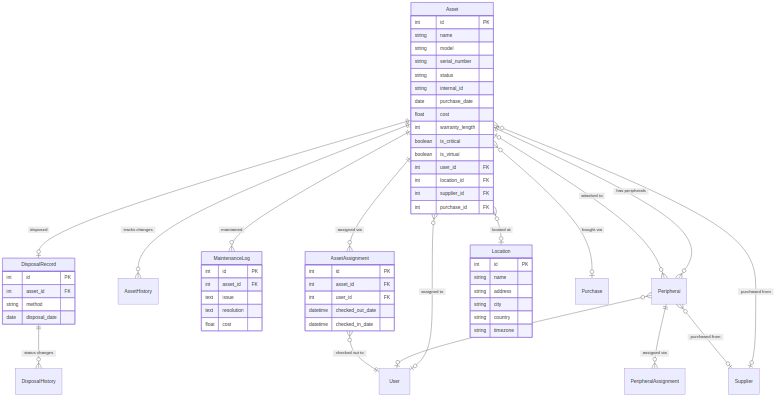
Assets & hardware
Tracks hardware lifecycle from procurement to disposal, with assignment history, maintenance, and peripherals.
Compliance & frameworks
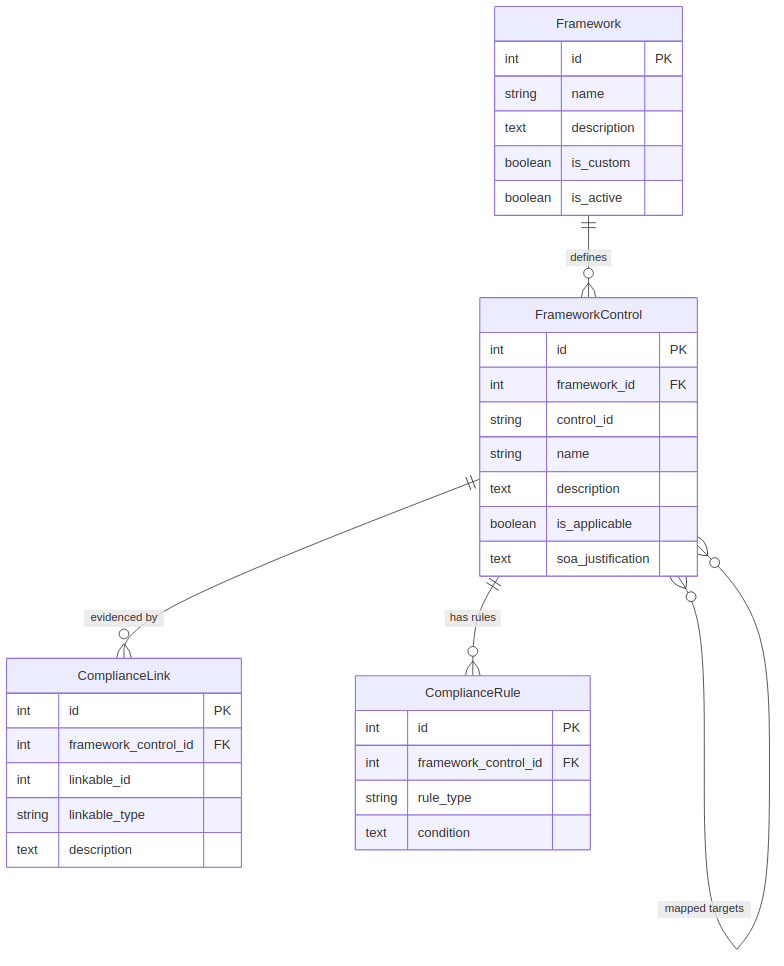
The core governance engine: frameworks define requirements, controls define individual rules, and compliance links connect evidence from any entity to any control.
Polymorphic linking
ComplianceLink.linkable_type stores the entity class name (Asset, Policy, Supplier, etc.) and linkable_id stores its primary key. This avoids a separate junction table per entity type.
Audits
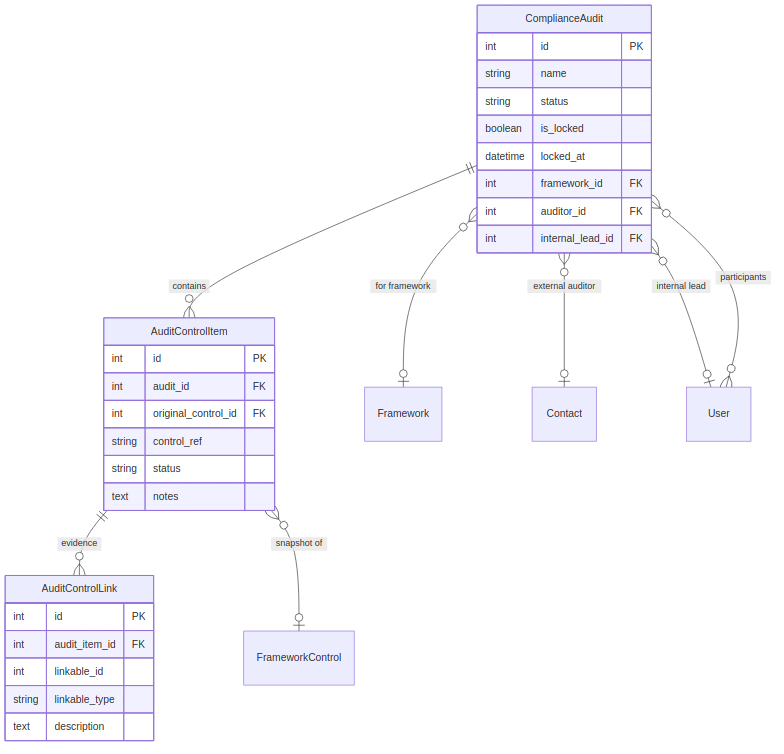
Point-in-time compliance snapshots with immutable evidence for auditors.
User access reviews (UAR)
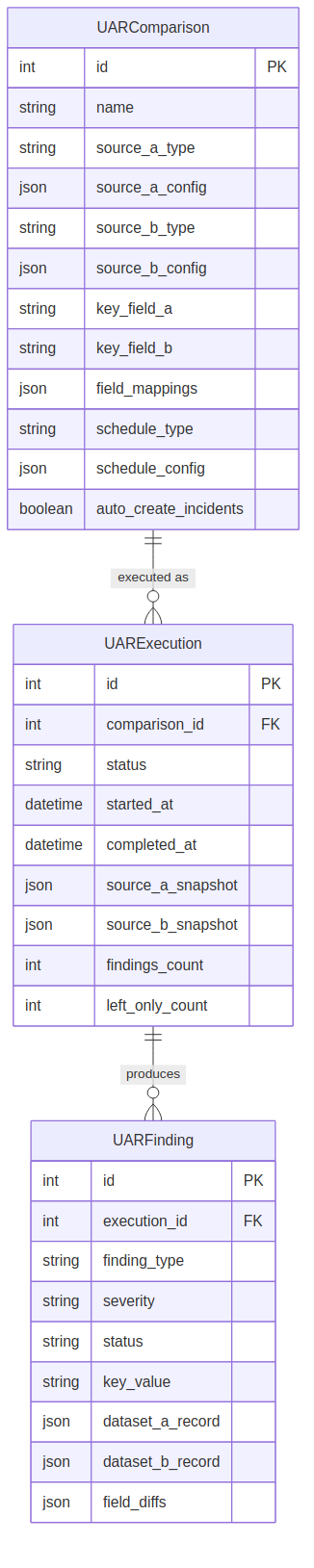
Automated comparison engine for detecting access discrepancies between systems.
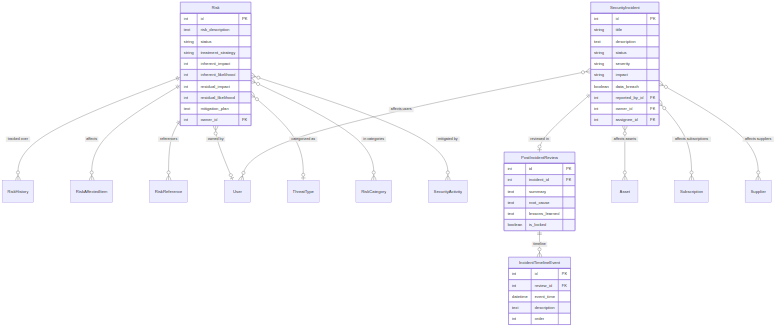
Risk & security
Risk register, security incidents with timeline tracking, and post-incident reviews.
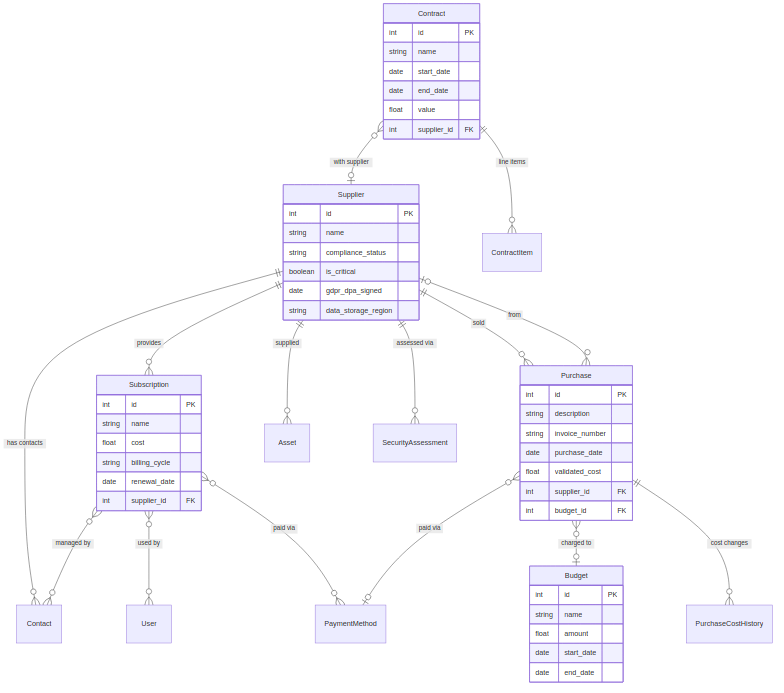
Procurement & vendors
Supplier management, contracts, subscriptions, purchases, and budgets.
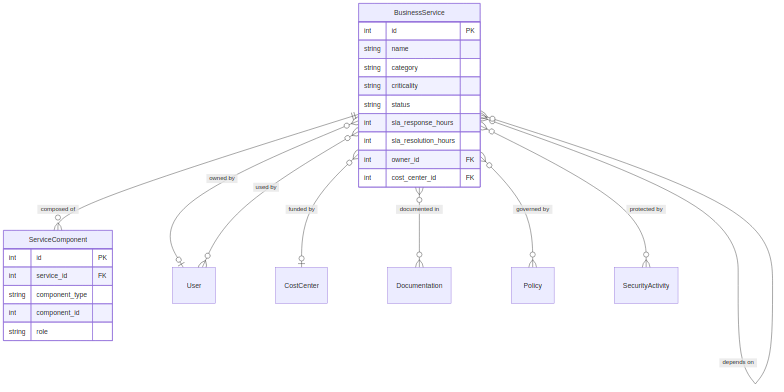
Service catalog
Business services mapped to technical components with dependency tracking.
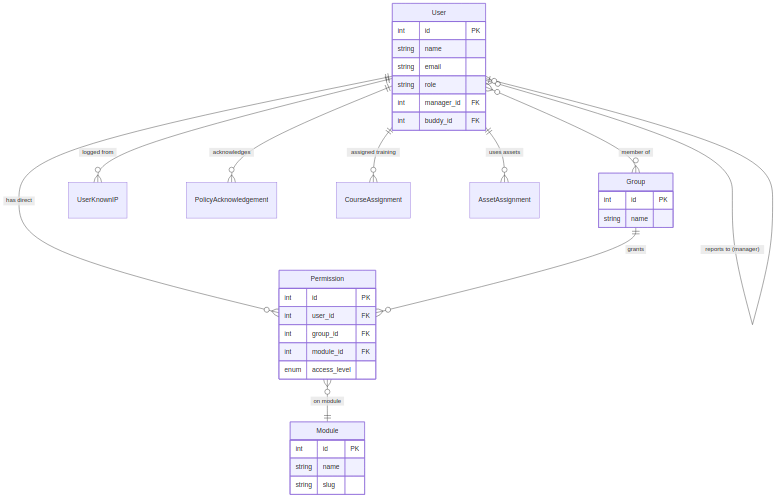
People & authentication
Users, groups, RBAC permissions, org chart, and known IP tracking.
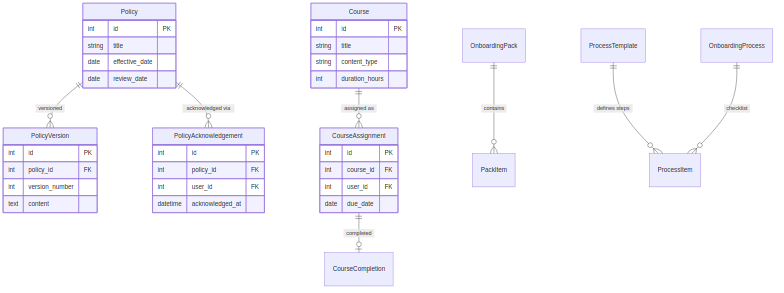
Policies, training & onboarding
Governance workflows: policy acknowledgment, training tracking, and employee lifecycle.
Cross-cutting patterns
Polymorphic linking
Both ComplianceLink and Link use a linkable_type + linkable_id pattern to connect any entity to compliance controls or to other entities without per-type junction tables. RiskAffectedItem and RiskReference follow the same pattern.
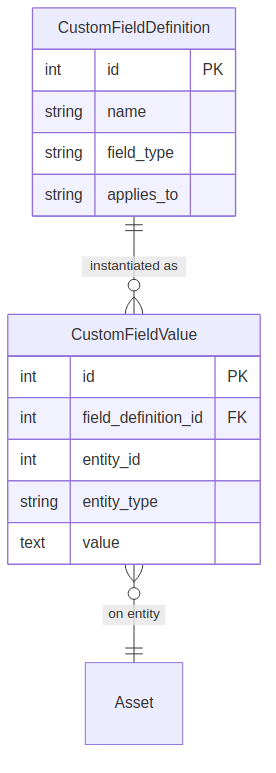
CustomPropertiesMixin
Models that include this mixin (Asset, User, Peripheral) support arbitrary custom fields:
Audit logging
Every mutation generates an AuditLog record via the SQLAlchemy event listener:
| Column | Content |
|---|---|
user_id |
Who made the change |
action |
INSERT / UPDATE / DELETE |
table_name |
Affected table |
record_id |
Affected record |
timestamp |
UTC timestamp |
changes |
JSON diff (DeepDiff output) |
Soft deletes and history
Most entities use is_archived flags rather than physical deletion. History tables (AssetHistory, RiskHistory, CostHistory, DisposalHistory) capture point-in-time snapshots for trending and timeline visualization.